

 Mohit Singh
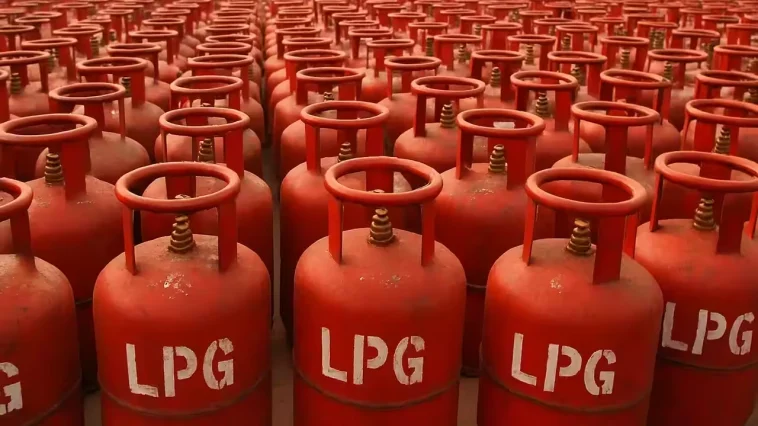
When you order a gas refill, you pay for the gas, not the metal around it. A standard domestic refill in India holds 14.2 kg of LPG. But the cylinder that arrives at your door weighs far more than that. To make sure you get what you pay for, you need to understand LPG cylinder weight—the net weight, the tare weight, and the total weight.
This guide covers every cylinder size, shows where the weight is stamped, and explains how to check your cylinder at delivery in under a minute.

Quick Answer: How Much Does an LPG Cylinder Weigh?
A full domestic LPG cylinder (the 14.2 kg size) weighs about 29 to 31 kg in total. Of that, the gas itself accounts for 14.2 kg. The empty cylinder, called its tare weight, weighs about 15 to 16.5 kg. You can find the exact figure stamped on the metal ring near the valve of your own cylinder.
Commercial cylinders are heavier. A full 19 kg commercial cylinder weighs around 37 to 38 kg.
LPG Cylinder Weight by Size
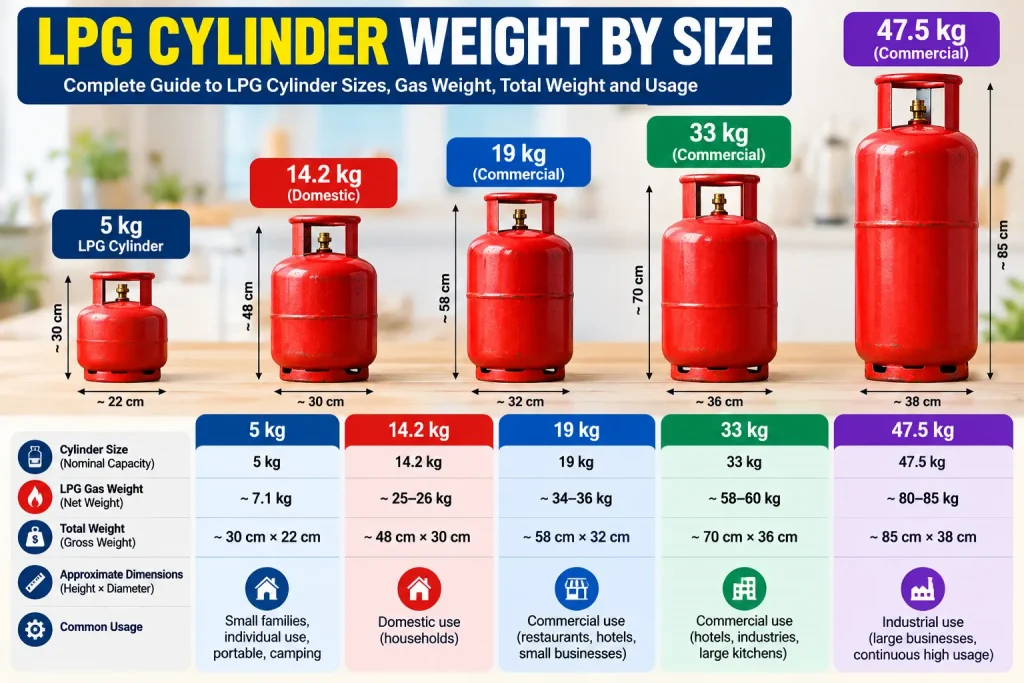
Here is a quick look at the gas cylinder weight for each common size in India:
| Cylinder Size | Net Weight (Gas) | Tare Weight (Empty) | Total Weight (Full) |
| 5 kg (portable) | 5 kg | 7–8 kg | 12–13 kg |
| 14.2 kg (domestic) | 14.2 kg | 15–16.5 kg | 29–31 kg |
| 19 kg (commercial) | 19 kg | 18–19 kg | 37–38 kg |
| 47.5 kg (jumbo) | 47.5 kg | 44–46 kg | 91–94 kg |
Domestic 14.2 kg Cylinder
This is the cylinder found in most Indian kitchens. It holds 14.2 kg of gas. In liquid form, that much LPG takes up about 27 liters of space. Add the tare weight, and the full cylinder tips the scale at roughly 30 kg. That is why carrying one upstairs is such a workout.
Commercial 19 kg Cylinder
Restaurants, canteens, hotels, and small factories use the 19 kg size. It carries more gas and has a heavier steel body. A full commercial cylinder weighs about 37 to 38 kg and usually needs a trolley or two people to move.
5 kg and 47.5 kg Cylinders
The small 5 kg cylinder is sold over the counter at shops and petrol pumps. It is easy to carry, with a total weight of just 12 to 13 kg. The jumbo 47.5 kg cylinder serves large kitchens and room heaters in North Indian winters. Full, it weighs over 90 kg.
Net Weight vs. Tare Weight vs. Total Weight
These three terms cause the most confusion. Here is exactly what each one means:
- Net Weight (The Gas You Pay For): This is the amount of LPG inside the cylinder. For a domestic refill, that is 14.2 kg. When oil companies revise LPG prices, they are pricing this gas, not the container.
- Tare Weight (The Empty Cylinder): This is the weight of the empty cylinder, valve included. It varies from cylinder to cylinder because different makers and batches use slightly different steel. Most domestic cylinders fall between 15 and 16.5 kg. Your exact tare weight is stamped on the ring at the top, marked as “T.W.” followed by a number, such as “T.W. 15.7”.
- Total (Gross) Weight (What the Scale Shows): Total weight is simply tare weight plus net weight.
The Formula:
T.W. 15.7 + 14.2 kg gas = 29.9 kg expected total weight
If your stamp shows a different tare weight, adjust the math. The answer tells you what the cylinder should weigh when full.
How to Check LPG Cylinder Weight at Delivery
You have every right to verify the weight before you accept the cylinder. Follow these steps:
- Find the tare weight. Look for the “T.W.” stamp on the ring near the valve.
- Ask for the scale. Delivery agents are expected to carry a hanging scale. Request them to weigh the cylinder in front of you.
- Do the math. Subtract the tare weight from the scale reading. The result should be at least 14.2 kg for a domestic refill.
- Flag any shortage. If the gas weight is clearly less, ask for a different cylinder or a fresh weighing before signing the bill.
No Scale? Try the Warm Water Test
You can also gauge the gas level without any equipment. Pour warm water slowly down one side of the cylinder. Wait a few seconds, then run your hand along the surface. The area with gas feels cool, because evaporation chills the steel below the fill line. The cool zone marks your remaining gas.
Weigh It at Home
No delivery scale? Use your bathroom scale. Weigh yourself first. Then weigh yourself again while holding the cylinder. The difference is the cylinder’s total weight. (Note: Home scales can be off by a kilogram, so treat the result as a close estimate).
What to Do If Your Cylinder Is Underweight
Short-filling a cylinder is a legal offense. If you receive an underweight refill:
- Ask the delivery agent to replace the cylinder or check it again on the spot.
- Note the shortage on the delivery receipt before you sign.
- Call your distributor or file a complaint through your gas company’s app or website.
- If the issue is not resolved, contact the National Consumer Helpline at 1915 (or 1800-11-4000).
- You can also report the matter to your district Legal Metrology office, which handles weights and measures complaints.
Other Markings Worth Checking on Your Cylinder
The ring near the valve carries more than the tare weight. It also shows the serial number, water capacity, and testing date.
The test date appears as a letter and a year, such as “A-25”. The letter stands for the quarter:
- A: January to March
- B: April to June
- C: July to September
- D: October to December
Using a cylinder past its testing date is unsafe. If the code on your cylinder is old, ask the agent for a different one.
Safety Warning: If you ever smell gas, leave the room, and call the LPG emergency helpline 1906 right away.
Frequently Asked Questions
An empty 14.2 kg domestic cylinder weighs about 15 to 16.5 kg. The exact tare weight is stamped on the ring near the valve of each cylinder.
A full 14.2 kg domestic cylinder weighs about 29 to 31 kg, depending on its tare weight. A full 19 kg commercial cylinder weighs about 37 to 38 kg.
About 27 liters in liquid form. The gas expands into vapor when released, which is how it fuels your stove.
Cylinders from different makers have different tare weights. An older cylinder can also feel lighter or heavier in hand. Both still hold the same 14.2 kg of gas.
No. The price you pay covers only the 14.2 kg of gas. The cylinder itself belongs to the oil company and is returned on each refill.
Now you know the full picture of LPG cylinder weight. A domestic refill holds 14.2 kg of gas, the empty cylinder weighs about 15 to 16.5 kg, and the full unit should tip the scale near 30 kg. Commercial 19 kg cylinders weigh about 37 to 38 kg when full. Check the “T.W.” stamp on your cylinder, do the simple math at delivery, and report any shortage without delay. Two minutes of checking protects the money you spend on every refill.




One Comment
Leave a ReplyOne Ping
Pingback:LPG Cylinder Price Today: No Relief for Consumers as Domestic and Commercial Rates Stay Firm